
Key Takeaways
What to Confirm Before Selecting Thermal Imaging
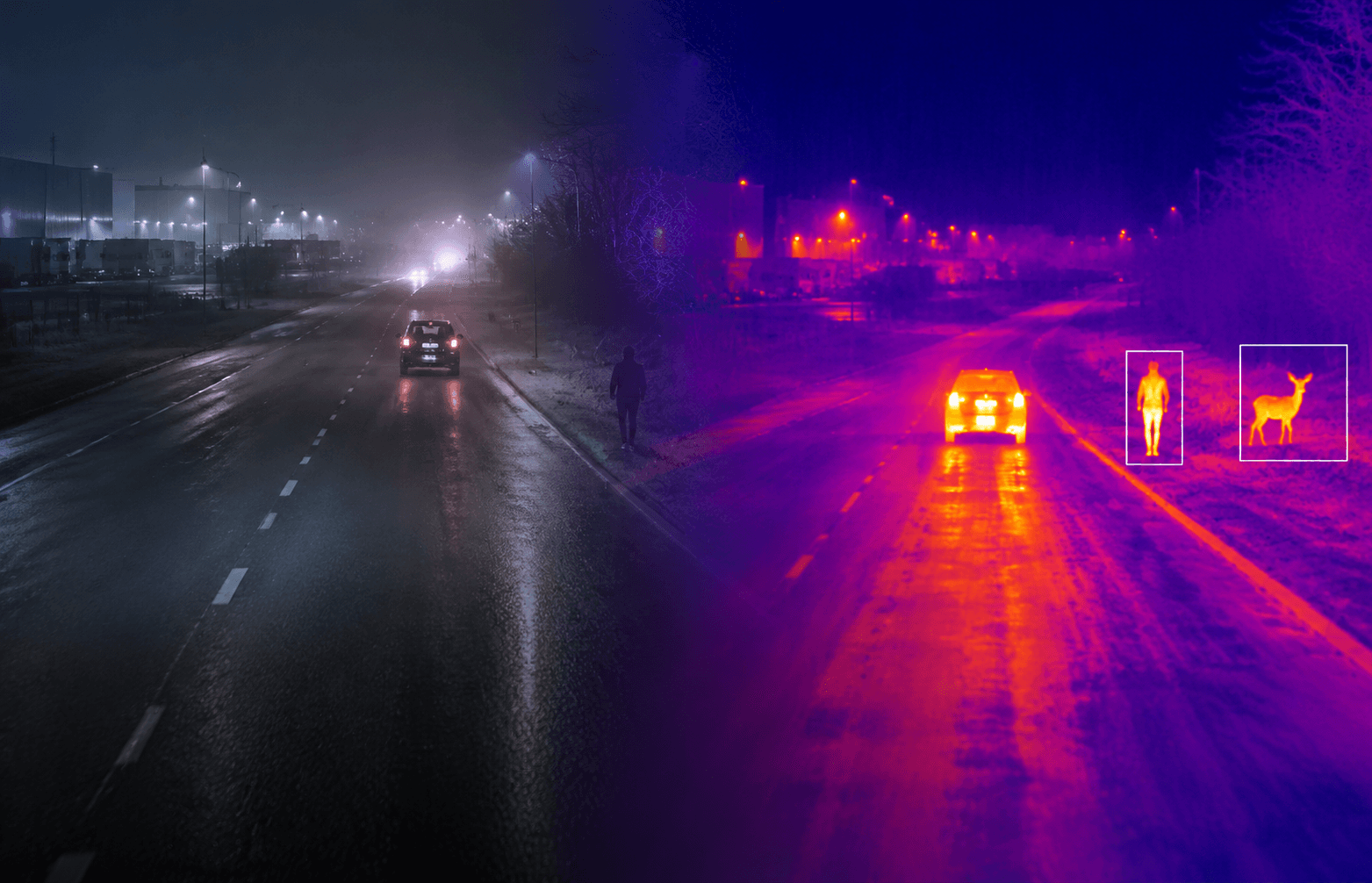
- Thermal imaging may provide additional visual information for trucks operating at night or on unlit roads.
- Thermal and visible-light cameras should be planned as complementary tools.
- Performance in fog, rain, dust and other low-visibility conditions depends on the environment and system configuration.
- Vehicle type, mounting, display, recording and platform requirements should be confirmed before product selection.
Introduction: Why Visibility Changes After Dark
Truck fleets do not operate in one perfect driving environment. Some routes run after dark. Some roads have limited lighting. Some vehicles move through loading yards, industrial zones, rural roads, glare-prone highways, or selected low-visibility conditions where standard visual observation can become more difficult.
For fleet operators and system integrators, this is where thermal imaging may become part of the safety discussion. A vehicle thermal camera is not a replacement for the driver, headlights, ADAS, or visible-light cameras. It is an additional observation tool that may help drivers and vehicle safety systems receive different visual information in darkness, headlight glare, and certain low-visibility operating environments.
The right question is not simply, "Should every truck use thermal imaging?" A better question is: which vehicles, routes, visibility concerns, display needs, recording workflows, and platform requirements should be reviewed before selecting a thermal imaging direction?
What Is a Vehicle Thermal Camera?
A vehicle thermal camera is a camera direction used to support road or surrounding-area awareness by capturing thermal information instead of relying only on visible light. In commercial vehicle projects, it may be considered when trucks operate at night, on unlit roads, or in selected conditions where visible-light cameras may not provide enough information by themselves.
For buyers comparing an AI thermal imaging system for commercial vehicles, the important point is to understand the application goal first. The camera is only one part of the project. Display method, mounting position, recording needs, and system workflow also affect the final configuration.
How thermal imaging differs from visible-light cameras
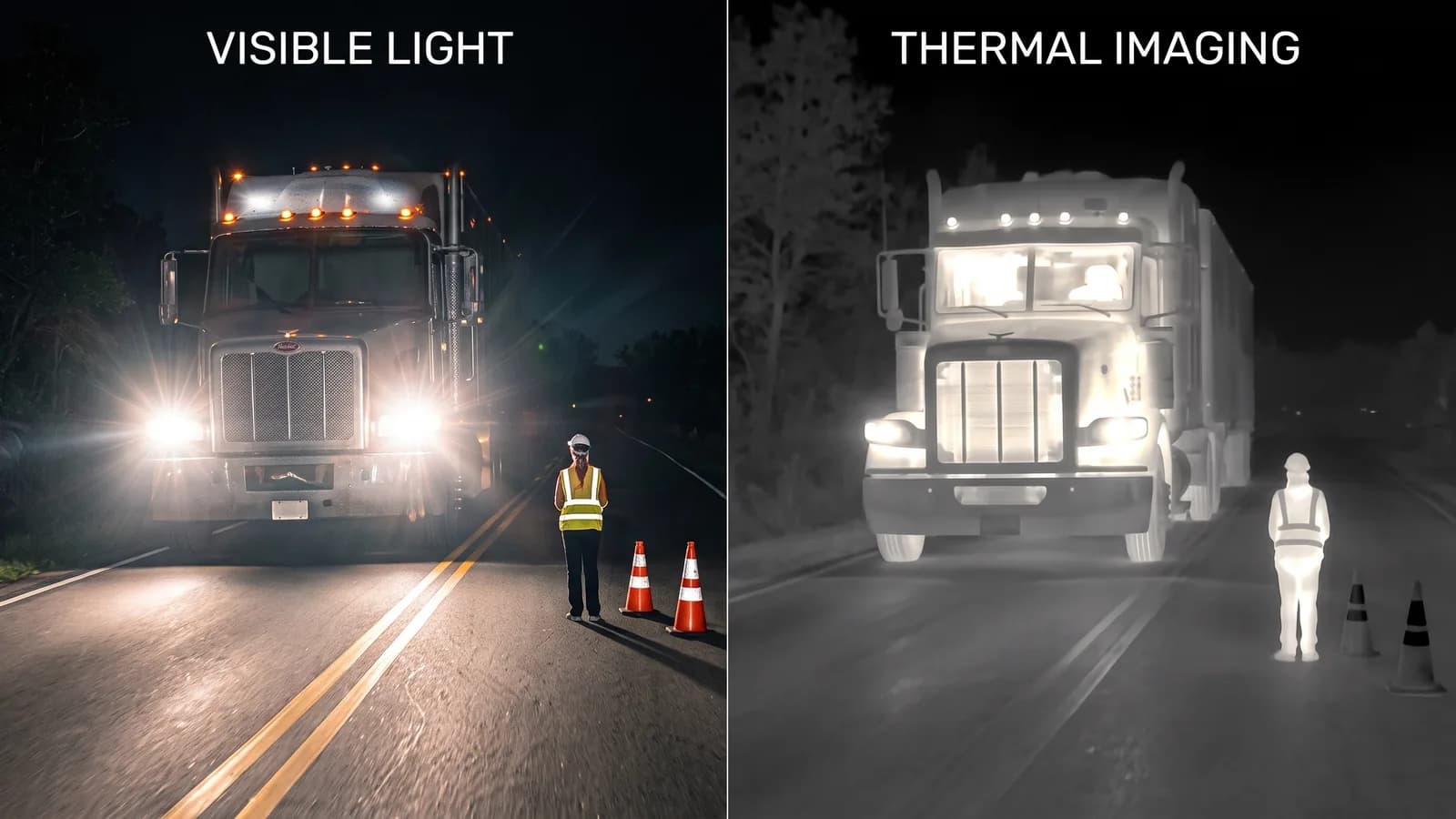
Visible-light cameras depend on the light available in the scene. They are useful for many driving, reversing, blind-spot, and monitoring applications, especially when lighting conditions are stable.
Thermal imaging works differently. It can provide another type of visual information based on thermal contrast. This can be useful in darkness or selected low-visibility scenarios, but the actual result depends on the operating environment, camera placement, selected product, display method, and system configuration.
Because these camera types provide different kinds of information, they should be planned as complementary tools rather than direct substitutes.
What buyers should not assume from the term “thermal camera”
The term “thermal camera” should not be treated as a universal promise. It does not mean the system is suitable for every vehicle, every weather condition, or every road environment. It also does not mean the camera can take over driver decisions, headlights, visible-light cameras, ADAS, or other safety systems.
Buyers should avoid selecting a thermal camera for truck projects based only on a product name. The correct approach is to review the vehicle type, route environment, visibility problem, mounting location, display requirements, and whether the video needs to connect with MDVR recording or a fleet platform workflow.
Why Trucks May Consider Thermal Imaging
Truck fleets may consider thermal imaging when the operating environment creates additional observation challenges. This often includes nighttime truck operations, unlit routes, glare-prone roads, or selected low-visibility environments.
For logistics and fleet projects, thermal imaging can be evaluated as part of a broader truck fleet safety solution, especially when the project also involves camera coverage, video recording, driver awareness, or fleet management workflows.
Vehicle size and observation needs
Commercial trucks are larger than passenger vehicles, and their operating conditions are different. The driver's seating position, vehicle length, turning behavior, trailer or cargo area, and route environment can all influence what the driver needs to observe.
This does not mean every truck requires the same camera configuration. A long-haul tractor, delivery truck, special vehicle, yard vehicle, or logistics fleet may have different visibility concerns. Thermal imaging should be considered only when the operating environment and project goal make it relevant.
Night routes, unlit roads and glare-prone environments
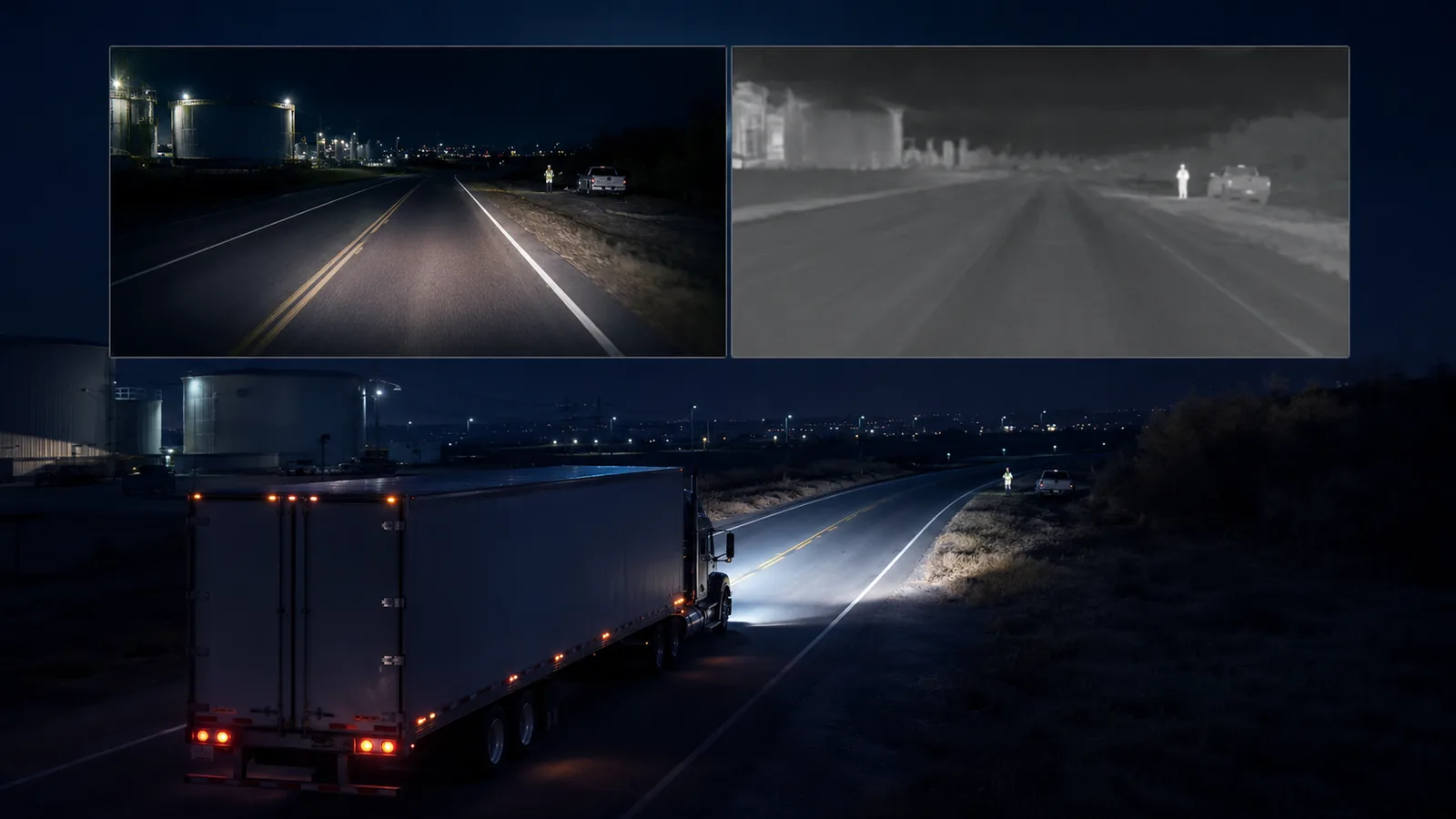
Thermal imaging may be considered for trucks that regularly operate after dark, travel through unlit road sections, or encounter strong headlight glare. It can also be reviewed for selected low-visibility driving conditions, depending on the environment.
The purpose is not to make broad claims about performance. The purpose is to identify where additional visual information may support the driver's awareness and where the final system should be confirmed based on vehicle and project requirements.
Application Scenario: Nighttime Truck Operations
Nighttime operation is one of the clearest reasons fleets start evaluating thermal imaging. In dark environments, visible-light observation can become more dependent on headlights, road lighting, and surrounding illumination.
A truck thermal camera may provide additional visual information for certain nighttime driving scenarios, but it should still be planned as part of a complete vehicle safety system rather than a standalone answer.
Highway, rural and logistics routes after dark
Highways, rural roads, and long-distance logistics routes may include stretches with limited lighting. In these scenarios, fleets may want to review whether thermal imaging can support additional road observation.
However, the system should not be selected based on a fixed assumption about distance or detection performance. Buyers should confirm the actual driving environment, camera placement, display method, and whether the thermal video needs to be recorded or reviewed later.
Loading yards, parking areas and industrial zones
Nighttime visibility challenges are not limited to open roads. Loading yards, parking areas, distribution centers, industrial zones, and work sites may also create observation needs, especially when vehicles move at low speed around equipment, trailers, loading docks, or other vehicles.
In these environments, thermal imaging may be considered as an additional view. It should be evaluated with the site layout, vehicle path, mounting position, and driver display requirements in mind.
Application Scenario: Unlit Roads
Unlit roads can create a different planning challenge from normal night driving. The driver may have headlights, but visible-light observation is still affected by the available illumination and road environment.
Thermal imaging can provide another type of visual information, but it should not be described as a replacement for vehicle lighting or driver observation.
Additional observation beyond visible-light conditions
A vehicle thermal imaging system may help provide additional observation information in darker scenes. This can be useful when a fleet wants to review visibility support beyond a standard visible-light camera direction.
The key word is “additional.” Thermal imaging should be used to complement the driver's existing observation methods. It should not be presented as a certain-result detection tool or a universal solution for every road.
Why mounting position and vehicle type matter
Mounting position has a direct impact on what the camera can observe. A camera mounted for forward road awareness will have a different purpose from one used for side-area, blind-spot, or work-zone visibility.
Vehicle type also matters. Trucks, trailers, special vehicles, and fleet vehicles may have different body structures, installation space, cable routing conditions, display positions, and recorder requirements. These details should be reviewed before selecting a final system direction.
Application Scenario: Headlight Glare
Headlight glare is another reason some fleets evaluate thermal imaging. Oncoming vehicle lights, reflective wet roads, or bright work-site lighting can affect visible-light observation.
Thermal imaging may provide a different view in glare-prone situations, but it should not be described as eliminating glare risk.
When visible-light observation may be affected
Visible-light cameras and human vision both depend on the way light appears in the scene. When strong headlights or reflective surfaces affect the view, the driver may need additional awareness support.
In this context, thermal imaging can be evaluated as part of the project. The final benefit depends on the route, camera position, display method, and selected system configuration.
How thermal imaging can complement the driver’s view
Thermal imaging can complement the driver's view by providing additional visual information that is different from a normal visible-light image. This can be helpful in selected nighttime or glare-prone applications.
It is important to keep the language precise. Thermal imaging supports awareness; it does not take over driver decisions. It can be one module within broader AI Safety & Vision systems, not a guarantee that all risks will be detected.
Application Scenario: Selected Low-Visibility Conditions
Some fleets also ask about fog, rain, dust, wet-road conditions, or other low-visibility environments. These scenarios require careful wording and careful project evaluation.
Thermal imaging may support selected low-visibility scenarios, but the actual result depends on the environment, installation position, camera type, display method, and system configuration.
Fog, rain, dust and wet-road conditions: cautious planning
It is not accurate to say that thermal imaging simply “sees through” fog, rain, or dust. Low-visibility environments vary widely. The result can change depending on density, temperature contrast, road surface, mounting position, vehicle speed, and other site conditions.
For this reason, B2B buyers should describe the real operating environment before selecting a thermal camera. A general product name is not enough to confirm suitability.
Why performance must be confirmed by environment and configuration
Performance expectations should be confirmed for the selected vehicle and project. Buyers should share where the truck operates, what the visibility concern is, how the camera will be mounted, whether the driver needs an in-cab display, and whether the video needs to be recorded or reviewed.
This approach helps keep the project grounded in real application needs rather than broad assumptions.
How Thermal Imaging Complements Visible-Light Cameras
Thermal imaging and visible-light cameras can be planned together because they serve different observation purposes. One is not automatically better than the other in every situation.
For many commercial vehicle projects, the practical question is how each camera direction supports the overall safety and visibility workflow.
Thermal view and visible-light view are not replacements for each other
Visible-light cameras can support normal road, side, rear, cabin, or cargo-area viewing. Thermal imaging can provide additional information in darkness, glare, or selected low-visibility scenarios.
A fleet may choose one or both depending on the project. The final decision should be based on vehicle type, operating environment, risk area, driver display needs, and whether recording or platform review is required.
Driver awareness, not driver replacement
Thermal imaging should be described as driver awareness support, not driver replacement. The driver remains responsible for vehicle operation and decision-making.
The same caution applies to ADAS, DMS, surround-view systems, cameras, displays, and recorders. These systems can support visibility and review workflows, but they should not be presented as replacing safe driving practices or project-specific evaluation.
Integration With Displays, MDVR and Fleet Workflows
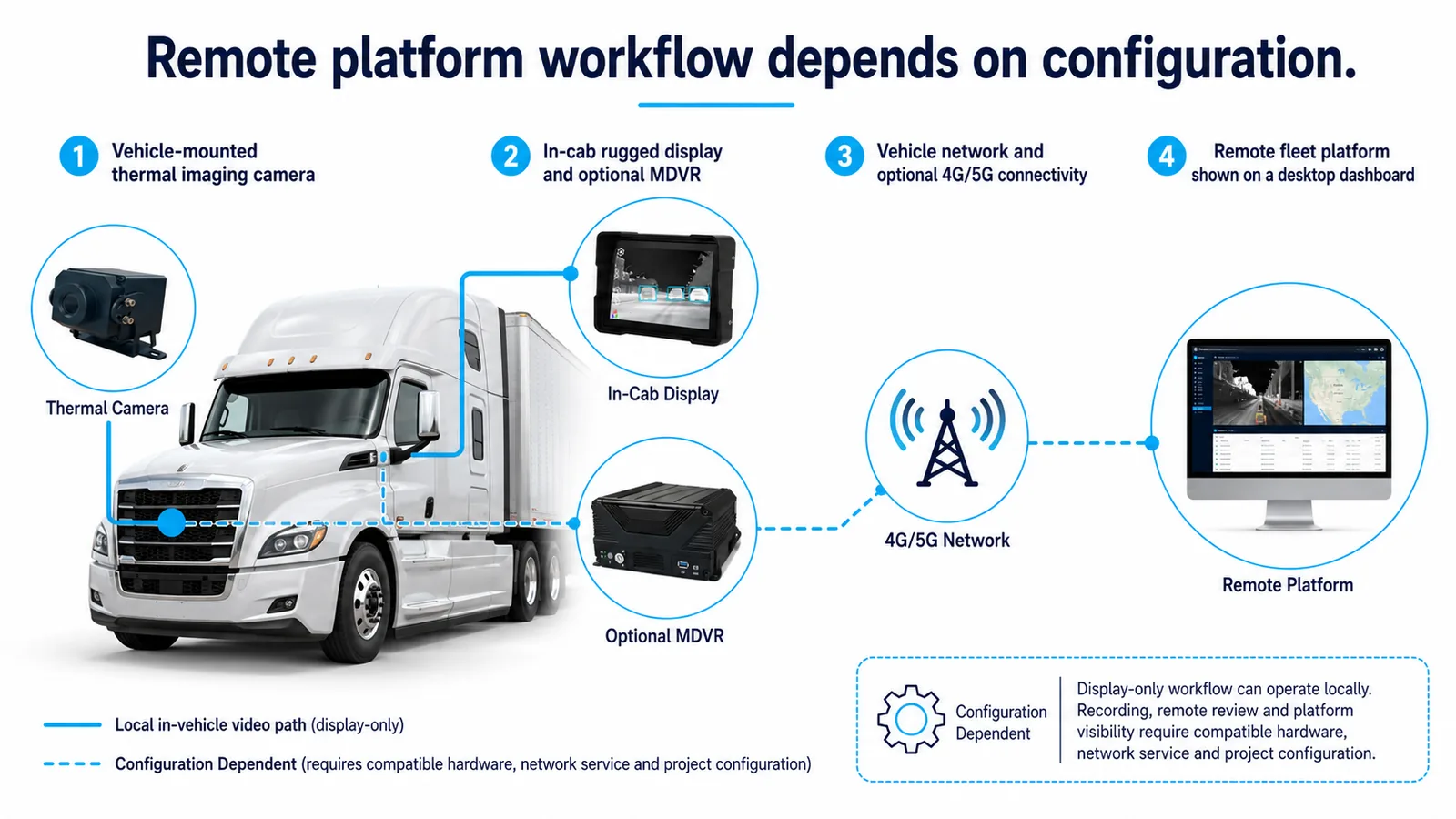
A thermal imaging project may involve more than a camera. Depending on the vehicle and system design, the project may also include an in-cab display, MDVR recording, event review, or remote platform workflow.
These functions should be confirmed before quotation because they affect hardware selection, installation planning, and project scope.
In-cab display and alert workflow
Some projects may require the driver to view thermal imaging information on an in-cab display. The display position, screen type, viewing workflow, and alert method should be confirmed based on vehicle layout and project needs.
Buyers should avoid assuming that every display or alert workflow is supported by default. The selected system must be reviewed as a project configuration.
MDVR recording and event review
Thermal video may also be evaluated as part of MDVR recording or event review planning. If the fleet needs recorded video, playback, or incident review, the project should confirm camera input, recorder direction, storage planning, and review workflow.
A video telematics system or AI MDVR recording system may be relevant when the project includes multi-camera recording, event review, or fleet video workflows. Compatibility and final functions should be confirmed for the selected device and project.
Remote platform workflow depends on configuration
Some fleets may want remote review, platform visibility, or fleet workflow integration. These capabilities depend on the selected hardware, network conditions, platform setup, and project scope.
It is better to describe this as a configuration question, not a default function. Remote platform workflows should be confirmed before selecting the system.
Installation and Project Planning Considerations
A thermal imaging project should be planned around the vehicle and use case. Camera choice is only one part of the decision.
The project team should review mounting location, field of view, display needs, power, cabling, recorder direction, platform expectations, and operating environment before confirming a configuration.
Vehicle type, camera position and field of view
Vehicle type affects camera placement. A logistics truck, long-haul vehicle, special vehicle, or fleet service vehicle may require a different mounting approach.
Camera position should be selected according to the intended observation area. Buyers should avoid using a universal installation assumption for every truck. The selected camera direction should match the visibility concern and vehicle structure.
Power, cabling, display and recorder planning
Installation planning should include power supply, cable routing, display placement, recorder connection, and available vehicle space. These items can affect project feasibility and installation complexity.
If MDVR recording or platform review is needed, those requirements should be discussed early. Waiting until after product selection can create configuration gaps.
Operating environment and project constraints
The operating environment should be clearly described. Night routes, unlit roads, glare-prone roads, wet areas, dusty sites, loading yards, and industrial zones may each require different planning.
OEM/ODM or retrofit projects may also include additional constraints, such as branding, interface, documentation, or vehicle integration requirements. These should be reviewed before final selection.
Questions to Ask a Thermal Camera Supplier
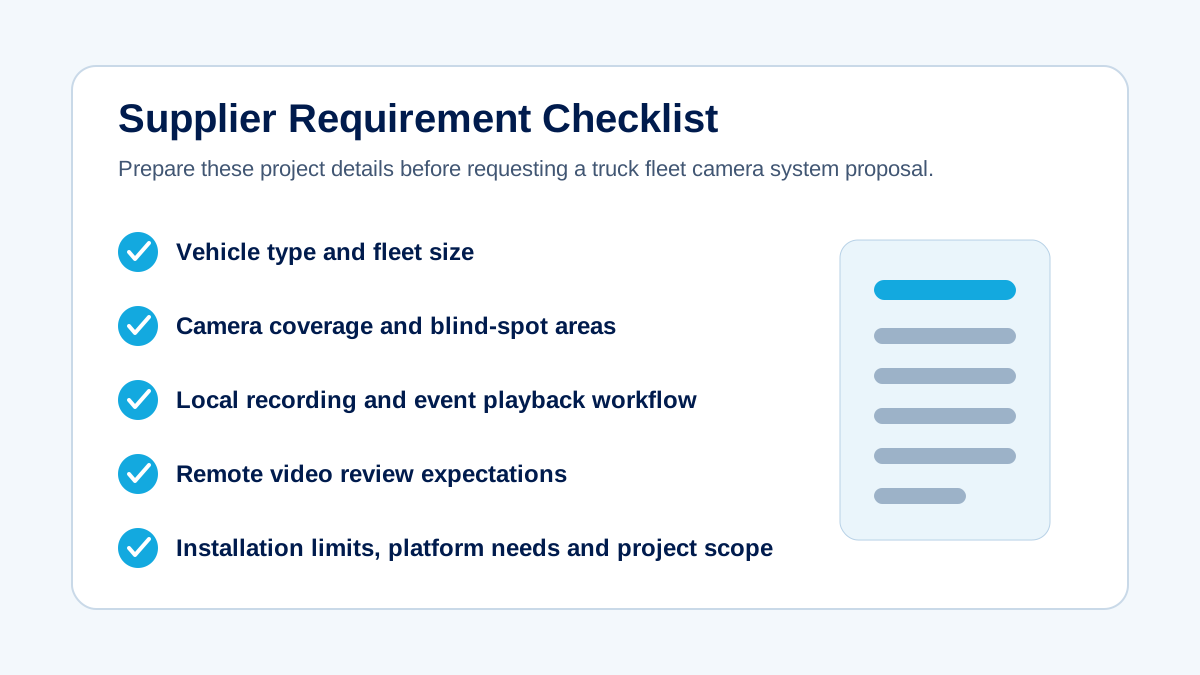
Before requesting a proposal, buyers should prepare a clear project summary. This helps the supplier review the right product direction without assuming a fixed configuration.
Project Planning Checklist
Questions to Ask a Thermal Camera Supplier
This checklist is a starting point for project discussion. It helps clarify the vehicle, environment, recording, display, and platform needs before product selection.
| Information to Provide | Why It Matters |
|---|---|
| Vehicle type | Helps evaluate mounting position, display needs, and system direction |
| Fleet size | Helps estimate project scope without assuming one configuration for all trucks |
| Operating environment | Clarifies night routes, unlit roads, glare, or selected low-visibility conditions |
| Main visibility concerns | Identifies whether the issue is forward view, side area, blind spot, yard operation, or route visibility |
| Camera mounting position | Affects the observation area and installation planning |
| In-cab display requirements | Helps confirm how drivers may view thermal information |
| MDVR recording requirements | Determines whether thermal video needs local recording or event review |
| Remote platform expectations | Clarifies whether fleet workflow or remote review is required |
| Installation constraints | Covers power, cabling, vehicle space, and retrofit limitations |
| Target market or documentation requirements | Helps identify documents or project requirements that may need confirmation |
FAQ
Vehicle Thermal Camera FAQ
What is a vehicle thermal camera used for on trucks?
A vehicle thermal camera is used to provide additional road or surrounding-area observation information in darkness, headlight glare, and selected low-visibility conditions. For trucks, it can support driver awareness and safety system planning, but it does not take over driver decisions or standard vehicle cameras.
When should a truck fleet consider thermal imaging?
A truck fleet may consider thermal imaging for nighttime routes, unlit roads, glare-prone environments, loading yards, or selected low-visibility scenarios. The decision should depend on the operating environment, mounting position, display needs, recording workflow, and selected system configuration.
Can a thermal camera replace a standard vehicle camera?
No. A thermal camera should complement, not replace, a standard visible-light vehicle camera. The two camera types provide different kinds of visual information, so many projects evaluate them together based on vehicle type, visibility needs, and system workflow.
Can truck thermal cameras be used in fog or rain?
Truck thermal cameras may support selected low-visibility environments, but performance depends on the specific fog, rain, dust, road surface, mounting position, and system configuration. Buyers should avoid assuming the same result in every condition and confirm requirements for the actual route.
Can thermal imaging connect with an MDVR or in-vehicle display?
Thermal imaging can be evaluated with an in-vehicle display, MDVR recording, or event review workflow, depending on hardware inputs and project configuration. The final connection method, display behavior, and recording workflow should be confirmed for the selected vehicle and system.
What information is needed before selecting a thermal camera for a truck?
Buyers should provide vehicle type, fleet size, operating environment, visibility concerns, preferred mounting position, display needs, MDVR recording requirements, remote platform expectations, and installation constraints. This helps the supplier evaluate a suitable thermal camera for truck applications.
Conclusion
Vehicle thermal cameras can be useful in truck projects where nighttime operation, unlit roads, glare, or selected low-visibility conditions create additional observation needs. They should be planned carefully as part of the vehicle's broader safety and visibility workflow.
The best starting point is not a fixed product model or a universal installation plan. It is a clear description of the vehicle, route, visibility concern, display method, recording need, platform expectation, and project constraints.
Related Posts
How to Plan a Truck Fleet Camera Monitoring System
Plan truck fleet camera systems by defining vehicle type, camera coverage, local recording, remote video, fleet tracking, and supplier requirements before requesting a proposal.